
Featured News

Planetary Science Institute’s Samuel Courville recently earned the American Geophysical Union (AGU) Study of the Earth’s Deep Interior (SEDI) Section Graduate Research Award. Courville completed his doctoral degree in 2025 at Arizona State University, where…



NASA’s Curiosity Mars rover used LED lights to create this rare nighttime view of the Red Planet’s surface on Dec. 6, 2025. The LED lights are part of the Mars Hand Lens Imager, or MAHLI, a camera on…

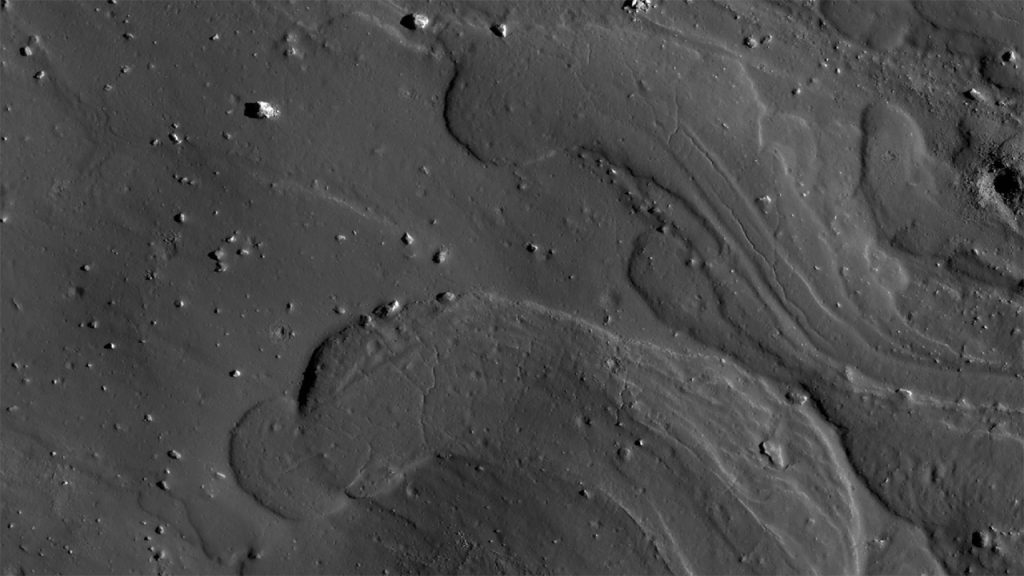
This story was written by PSI Senior Scientist and Senior Education and Communication Specialist Pamela Gay, the citizen scientist site developer for the project described below. As humanity prepares for a future that carries humans…


What a year 2025 has been! After being a senior scientist at PSI for 12 years, I started as Deputy Director at PSI in January of 2025 and then began my term as PSI Director…

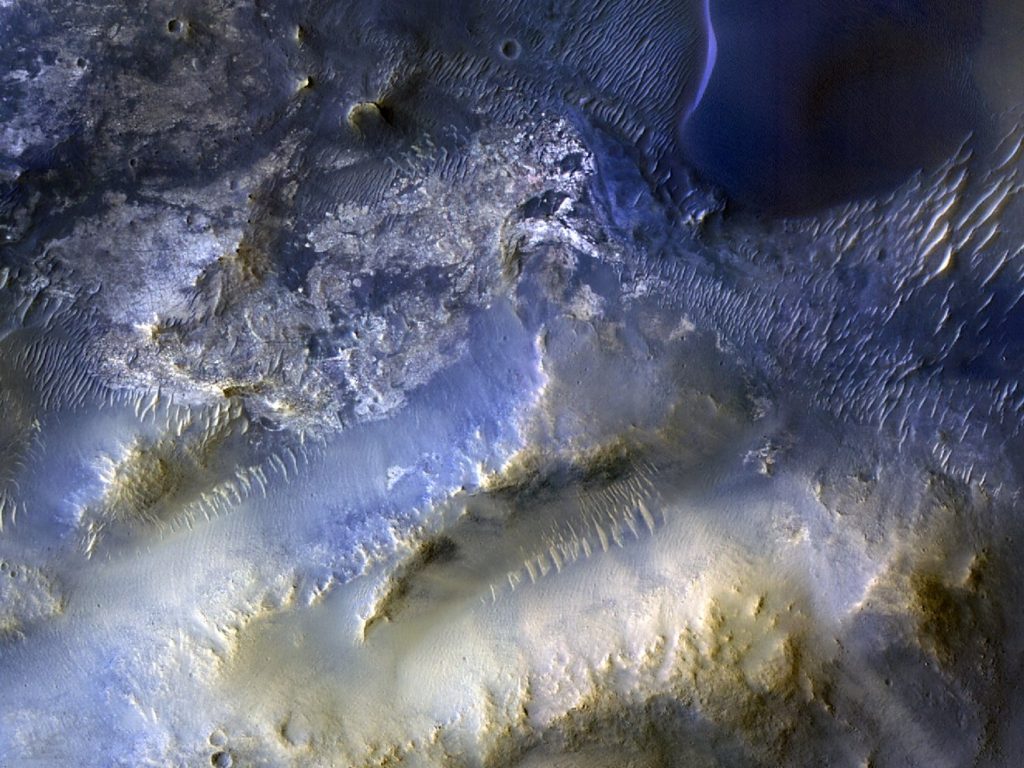
NASA’s Mars Reconnaissance Orbiter HiRISE camera recently snapped its 100,000th image of the Red Planet, and Planetary Science Institute scientists and intern chose the target which later became the milestone image. Short for High-Resolution Imaging…

About PSI
The Planetary Science Institute is a private, nonprofit 501(c)(3) corporation dedicated to Solar System exploration. It is headquartered in Tucson, Arizona, where it was founded in 1972.
PSI scientists are involved in numerous NASA and international missions, the study of Mars and other planets, the Moon, asteroids, comets, interplanetary dust, impact physics, the origin of the Solar System, extra-solar planet formation, dynamics, the rise of life, and other areas of research.
They conduct fieldwork on all continents around the world. They are also actively involved in science education and public outreach through school programs, children’s books, popular science books and art.
PSI scientists are based in 32 states, the District of Columbia and several international locations.
Learn More
Our Science
Sci Art
PSI’s Sam Courville captured this volcanic eruption of Sundhnukur, near the capital city of Iceland. “The volcanic area had just become active again after not having erupted for the past ~800 years,” he said. “I traveled there specifically to see the volcano, and got lucky that it started to erupt during my visit. After erupting for a few days, the winds and the volcanic smog had died down enough for helicopters to fly over the site. As a passenger (I can’t fly helicopters yet!), I took some photos looking straight down at the lava flows. I liked the way that some of the fresh basalt floated like icebergs down the lava channel.”
